




Heavy Machinery Loans For Small Businesses
Key takeaways
- A heavy machinery loan is asset-backed finance: the equipment secures the loan, which usually means smaller businesses can borrow more, over longer terms, than an unsecured loan allows.
- New and used machinery can both be financed, including private-sale and auction purchases, as long as the asset holds its value.
- Common structures include chattel mortgage, hire purchase, finance lease and rent-to-own, each with different ownership and tax outcomes.
- Your rate is not a fixed number. It reflects your business, the machine, and which lender has the strongest appetite for your situation.
- Low-doc options give newer businesses and operators without full financial statements a realistic path to finance.
- A broker compares many lenders at once, which is often the fastest route to a competitive, well-structured deal.
–
For a small business, the right machine can be the difference between quoting on a job and actually winning it. An excavator, a wheel loader, a forklift or a compactor often costs more than a year of working capital, and paying for it in one hit can leave the bank account dangerously thin.
Heavy machinery loans give Australian small businesses a practical way to acquire that equipment now and pay for it steadily over time, using the machine itself as security.
What is a heavy machinery loan?
A heavy machinery loan is a form of asset finance that lets a business buy large equipment and repay the cost over an agreed term rather than upfront. The machine acts as security for the loan, so the lender carries less risk and can usually offer a larger amount over a longer period than an unsecured business loan.
Because the equipment holds tangible resale value, lenders will often fund most, and sometimes all, of the purchase price. That structure suits small businesses well. It keeps cash in the business for wages, fuel, materials and the everyday costs of trading while the equipment earns its keep on site.
How heavy machinery loans work for small businesses
The process is more straightforward than many first-time buyers expect.
Once you have chosen the equipment, the lender assesses the asset alongside your business, then structures the finance over a term that reflects the working life of the machine. Repayments can generally be set weekly, fortnightly or monthly to match how money moves through your business.
Because the loan is secured by the machinery, the lender registers its interest on the Personal Property Securities Register (PPSR). This is standard for commercial asset finance in Australia and simply records that the equipment is financed until the loan is repaid.
Most heavy machinery finance is arranged under commercial credit rather than consumer credit, which tends to mean a faster, more flexible assessment focused on the business and the asset.
What equipment can you finance?
Most income-producing machinery that holds its value can be financed. For small businesses across construction, civil works, earthmoving, farming, transport and trades, that covers a broad range of gear:
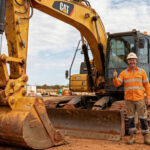
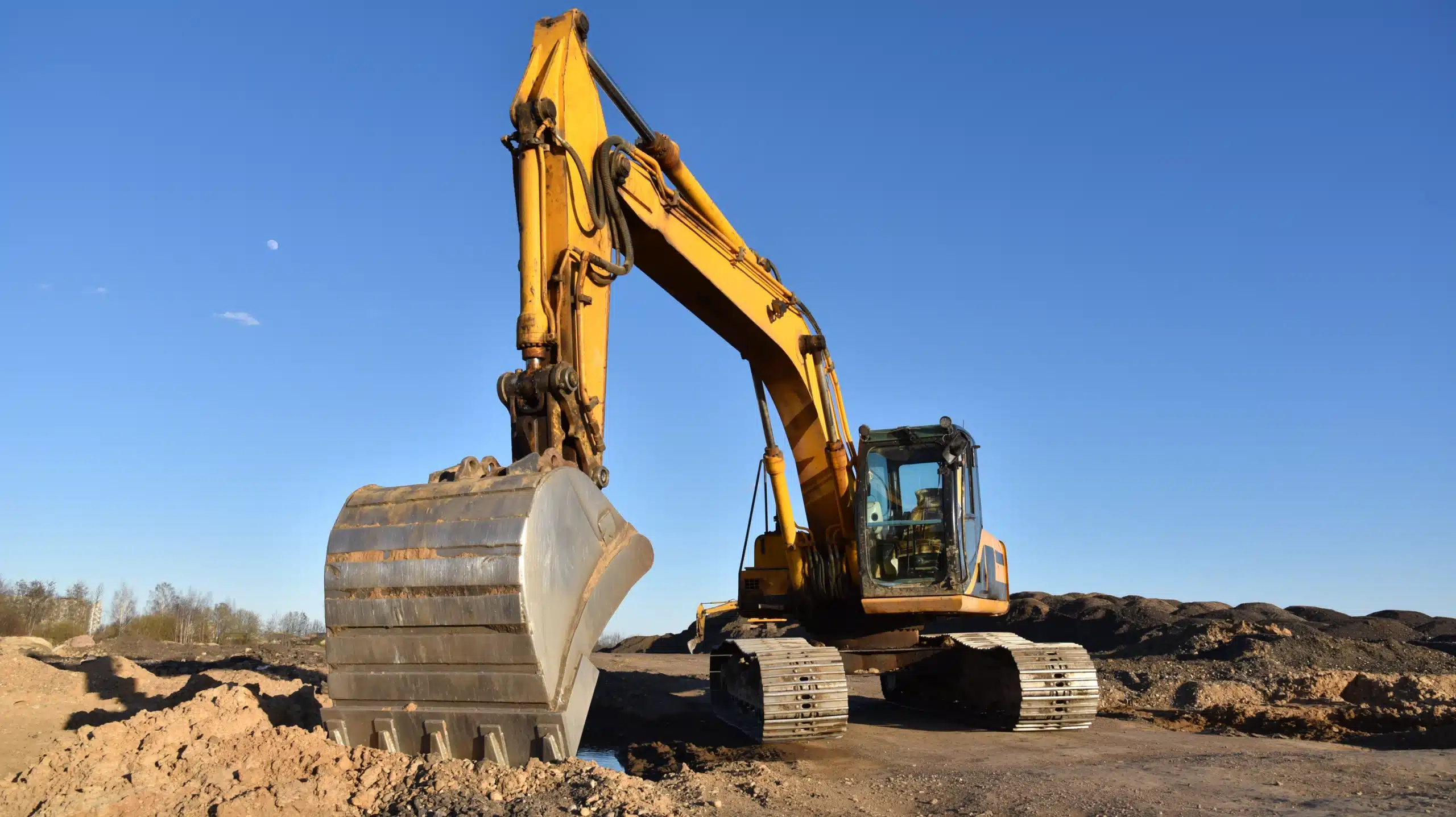
- Excavators, from compact machines for residential sites to larger units for civil projects
- Wheel loaders, skid steers and backhoes
- Bulldozers, graders, rollers and compactors
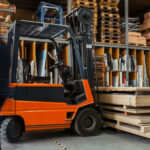
- Forklifts, telehandlers and material-handling equipment
- Cranes, elevated work platforms and access equipment
- Tractors, harvesters and other agricultural machinery
- Tippers, trailers and specialised attachments
Both new and used machinery can be financed, and many lenders will fund a private-sale or auction purchase, not only equipment bought from a dealer. If your work is in earthmoving, civil or plant hire, the same asset-backed approach applies. For a used or private purchase you will usually need the asset details: make, model, year, serial number and sometimes hours of operation or an independent valuation.
Heavy machinery loan structures explained
The structure you choose affects ownership, tax treatment and cash flow, so it is worth understanding the main options before you commit. Your accountant can help you match a structure to your circumstances.
| Structure | Who owns it during the term | At the end | Tax treatment (general) |
|---|---|---|---|
| Chattel mortgage | You do, from settlement | Yours outright once repaid | Claim depreciation and interest; GST credit on purchase upfront if registered |
| Hire purchase | The lender | Transfers to you after the final payment | Similar deductions to a chattel mortgage |
| Finance lease | The lender | Return, extend, or buy at residual value | Lease payments generally deductible; no depreciation claim |
| Rent-to-own | The lender | Part of your rent goes toward buying it | Payments generally deductible as an operating expense |
A chattel mortgage is the most popular choice among small businesses that want to own their machinery and build equity in it. Leasing options tend to suit operators who like to upgrade regularly or keep equipment off the balance sheet.
Buying against leasing: which suits a small business?
This is one of the first decisions to weigh up. Buying, usually through a chattel mortgage or hire purchase, means you own the asset, build equity in it, claim depreciation and treat it as a long-term part of your business.
Leasing keeps you flexible: you use the machine for a set term, then hand it back or upgrade, without carrying the asset long-term.
| Factor | Buying (chattel mortgage or hire purchase) | Leasing |
|---|---|---|
| Ownership | You own it, from day one or after the final payment | The lender owns it |
| Best for | Core machinery you will use for years | Machinery you plan to upgrade or need short-term |
| Equity | You build it in the asset | You do not build equity |
| Upgrading | Sell or trade in when ready | Hand back at the end of the term |
| Tax (general) | Depreciation and interest deductible | Payments generally deductible |
For most small operators buying a core machine they will use for years, ownership makes sense. Leasing can be smart for equipment that dates quickly or is only needed for a specific project.
There is no universal right answer, so it pays to run both past your accountant.
New against used machinery finance
Can you finance used machinery? Yes. Most lenders in Australia finance both new and used heavy machinery, including older equipment, as long as it holds resale value and has working life remaining.
New machinery often comes with longer available terms and manufacturer warranties, and its clear resale value can make for a smooth approval. Used machinery frequently offers better value for the money and is available straight away, without the lead time of a factory order. Lenders look at the age, hours, condition and resale value of a used machine when assessing it.
Some set an age limit for the end of the loan term and others have none, so the field of available lenders is wider than many buyers assume.
| Consideration | New machinery | Used machinery |
|---|---|---|
| Upfront cost | Higher | Lower |
| Availability | May involve lead time | Often immediate |
| Warranty | Manufacturer warranty | Varies with age and history |
| Finance terms | Often longer available | Depend on age and condition |
| Value retention | Depreciates fastest early on | Sits further along the curve |
Bank against broker: how to reach the sharpest deal
When you go straight to a single bank, you see one lender’s products and one credit appetite. If your business or your machine does not fit that lender’s preferred profile, you can be knocked back, or offered terms that are not the best available, without ever knowing what else was out there.
A commercial finance broker works differently. A broker compares many lenders at once, including non-bank and specialist financiers that do not deal directly with the public, then matches your application to the lender most likely to say yes on strong terms. That matters most for small businesses, newer ABNs and specialised machinery, where finding a lender with genuine appetite for your situation is the whole game.
| Factor | Going direct to a bank | Using a broker |
|---|---|---|
| Lender choice | One | Many, across banks and non-banks |
| Best-fit matching | You do the legwork | Matched to lender appetite for you |
| Specialised or used assets | Hit and miss | Wider range of options |
| Credit enquiries | Can stack up if you shop around | Targeted at the right lender first |
| Effort for you | Higher | Lower |
At AGM Finance, small businesses have access to more than 60 lenders through a single application. The job is to find the lender with the right appetite for your machine and your business model, then structure the finance so the deal genuinely works for you, no matter your transport or trade setup.
What interest rate can you expect on a heavy machinery loan?
There is no single rate that applies to every heavy machinery loan, and any figure quoted in the abstract can be misleading.
Your rate reflects a combination of factors: the strength and trading history of your business, the age and type of machine, the structure of the loan, and which lender’s appetite best fits your profile.
The most reliable way to know your rate is a tailored quote based on your actual situation, rather than a headline number pulled from an ad. It also pays to look past the rate alone. Fees, flexibility, repayment frequency and any balloon arrangement all shape the true cost of a loan, so the cheapest advertised rate is not always the cheapest loan.
How balloon payments work
A balloon payment, sometimes called a residual, is a lump sum set aside to be paid at the end of the loan term. By deferring part of the cost to the end, a balloon lowers your regular repayments across the term, which can help a small business manage cash flow.
For example, think of a small earthmoving operator financing a $150,000 excavator. If the loan is structured with a balloon set at 20% of the purchase price, roughly $30,000 is parked as a single payment due at the end of the term.
The repayments in between are lower than they would be on the same machine with no balloon, which frees up cash while the excavator is out earning. The trade-off is that the $30,000 still has to be dealt with at the end, by paying it out, refinancing it, or selling the machine and rolling into the next one.
Used well, a balloon is a handy cash-flow tool. The key is planning for that final payment from the outset so it is never a surprise.
What lenders look for (and how to strengthen your application)
Understanding what lenders assess helps you put your best foot forward. Every lender is different, but most look at a few common things:
- Your business: an active ABN, and usually GST registration. An established trading history helps, though newer businesses and first-time buyers are well catered for by specialist lenders.
- Your documentation: smaller loans can often be arranged with minimal paperwork through low-doc options, using your ABN and bank or BAS records rather than full financials. Larger loans generally call for more detail.
- The machine: lenders favour mainstream, well-maintained equipment with a clear resale market.
- Your position: a deposit or a trade-in can strengthen an application, though many established operators finance the full purchase price.
If your business does not fit the standard bank mould, that is not a dead end. It usually just means the right lender is a specialist one, which is exactly where a broker earns its keep.
Low-doc heavy equipment finance is worth a mention on its own here: for sole traders, subbies and newer businesses without a full set of financial statements, low-doc products open a realistic path to finance based largely on the asset and your trading activity.
Tax and the instant asset write-off
Financing machinery can carry genuine tax advantages, though the detail depends on your structure and circumstances, so treat this as general information and confirm the specifics with your accountant.
Under a chattel mortgage or hire purchase, a business can typically claim depreciation on the machine and deduct the interest portion of repayments. GST-registered businesses may be able to claim the GST on the purchase price in their next BAS.
Eligible assets may also qualify for the instant asset write-off, which allows the cost to be deducted sooner rather than across many years. These deductions can make a meaningful difference to the after-tax cost of your equipment.
How AGM Finance helps small businesses get equipped
AGM Finance has spent over three decades arranging finance for Australian businesses, from sole traders buying their first machine to established operators expanding a fleet.
With access to more than 60 lenders and a low-doc range that suits newer businesses, the focus is simple: find the lender with real appetite for your machine and your business, then structure the sharpest deal available. You can explore the full equipment finance range or start with a quick conversation about your next purchase.
If you are weighing up a heavy machinery purchase, a short chat can give you a clear picture of what is possible before you commit to anything.
Frequently asked questions
What is a heavy machinery loan?
A heavy machinery loan is asset-backed finance that lets a business buy large equipment and repay it over time, with the machine itself as security. Because the asset reduces the lender’s risk, businesses can usually borrow more, over longer terms, than with an unsecured loan.
Can a small business or new ABN get heavy machinery finance?
Yes. Newer businesses and first-time buyers are well catered for, often through low-doc products and specialist lenders. A broker can match a newer business with a lender that has an appetite for its situation.
Can I finance second-hand machinery in Australia?
Yes. Both new and used machinery can be financed, including private-sale and auction purchases. Lenders assess the age, hours, condition and resale value of the machine.
How much can I borrow for heavy machinery?
The amount depends on your business, the machine and the lender. Because the equipment secures the loan, small businesses can often finance most or all of the purchase price.
Is a deposit required?
Not always. Many established operators finance the full purchase price, while a deposit or trade-in can strengthen an application. The right approach depends on your business and the machine.
What is the difference between a chattel mortgage and a lease?
With a chattel mortgage you own the machine from the start and can usually claim depreciation and GST. With a lease the lender owns the asset and you use it, with the option to return, extend or buy it at the end of the term.
How long does approval take?
Straightforward applications can move quickly, sometimes within a day, especially with your documentation ready. More complex applications take a little longer.
Should I use a bank or a broker?
A broker compares many lenders at once, which usually gives a small business more options and a better chance of a well-structured deal than approaching a single bank.
- Author

- Tags